For Monument’s Sake!
While studying for my Master's degree at the Royal College of Art in London in 2021, I often found myself in fashion studios, surrounded by discarded textile treasures. It was then when their multifaceted meaning and aesthetic language captured my interest and made me rethink patchwork - a textile technique that uses material scraps to create new fabrics. Pieces of felt, leather, fur, silk, linen and cotton are pieced together or appliquéd into larger designs. Historically rooted in domesticity, necessity, and community, the process is often associated with female labour.
Our building faced Kensington Gardens, dominated by the golden gleam of the Albert Memorial, a lavish Gothic Revival monument honouring Queen Victoria's husband, and Physical Energy by G. F. Watts, which symbolises the dynamic force of ambition and the human drive to achieve. Passing by these monuments daily, I reflected on my own presence within the college, which for centuries positioned itself as an institution boasting educational and artistic superiority. The sculptures themselves seemed to embody these values, most visibly in their manifestation of phallic individuality.
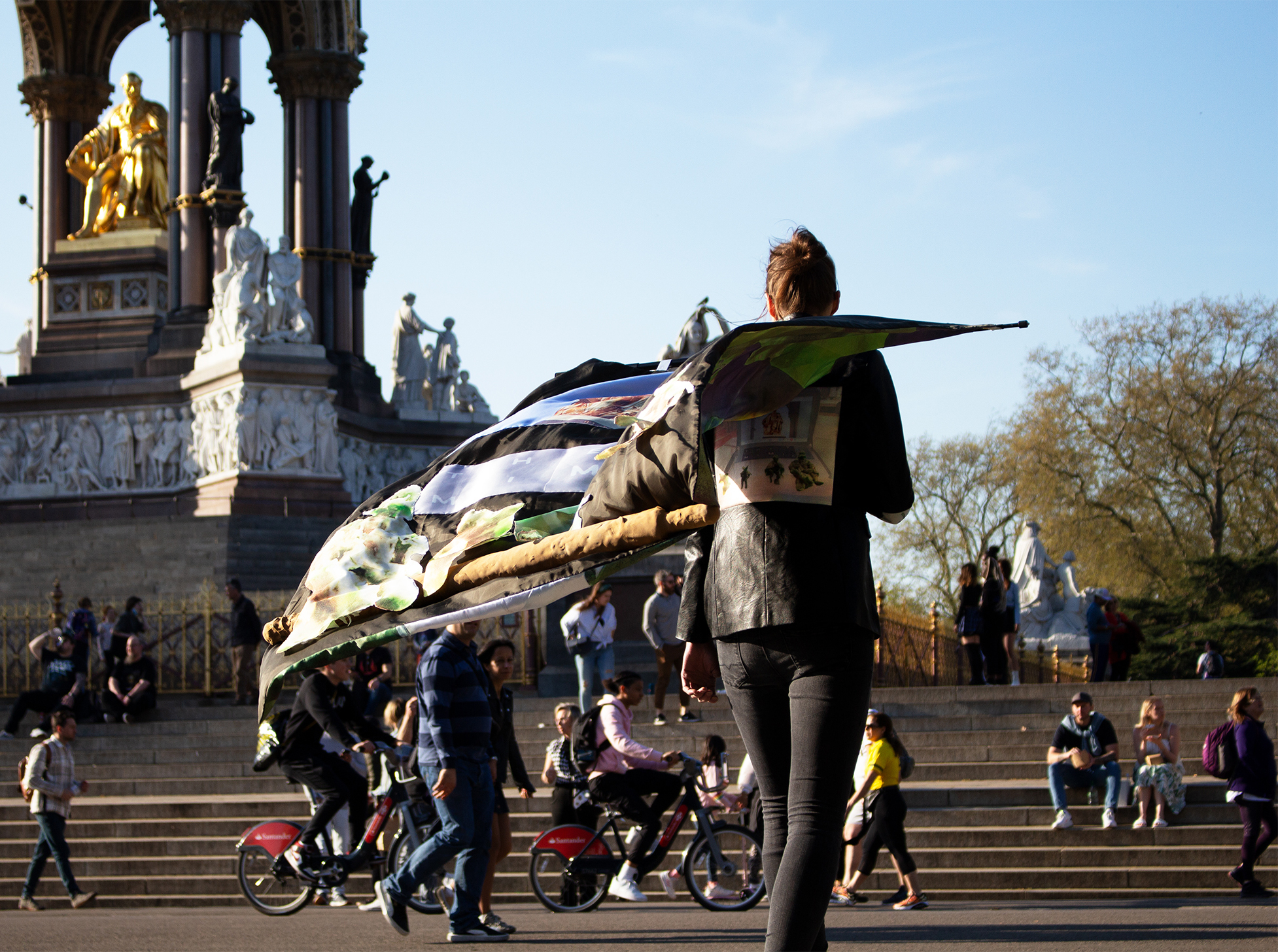
I invited my friends to help me mend and patch the gap I sensed between the monuments and its surroundings together. We ventured into the park to engage with the statues through interventions and integrate their presence into our artistic processes. When we approached Physical Energy, the wind blew a heart-shaped leaf into the rider’s hand, making me think of letters as a form of a potential affective dialogue between monuments and audience. Other sources of inspiration included the physical experiments of covering the sculptures in Kensington Gardens with a growing patchwork and Leonora Carrington’s paintings of horses. It was the latter that eventually inspired me to climb Physical Energy.
The final stage of my reflections took the form of the collaborative work “For Monument’s Sake!” - an installation that implied wrapping and covering a moveable structure to confront the scale of Kensington Gardens statues and create an ambivalent anti-monument, a textile remix of the garden sculptures and our engagement with them.
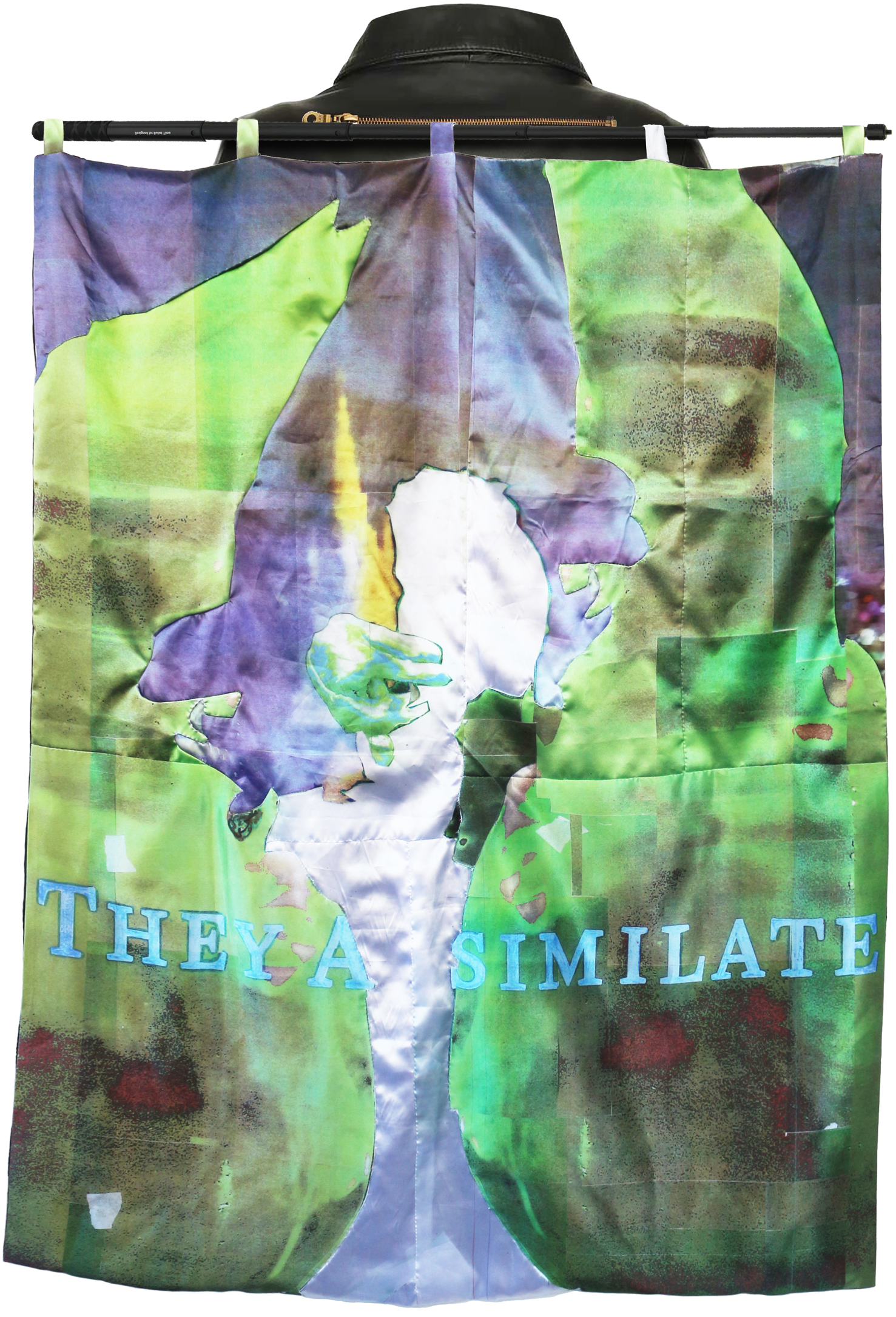
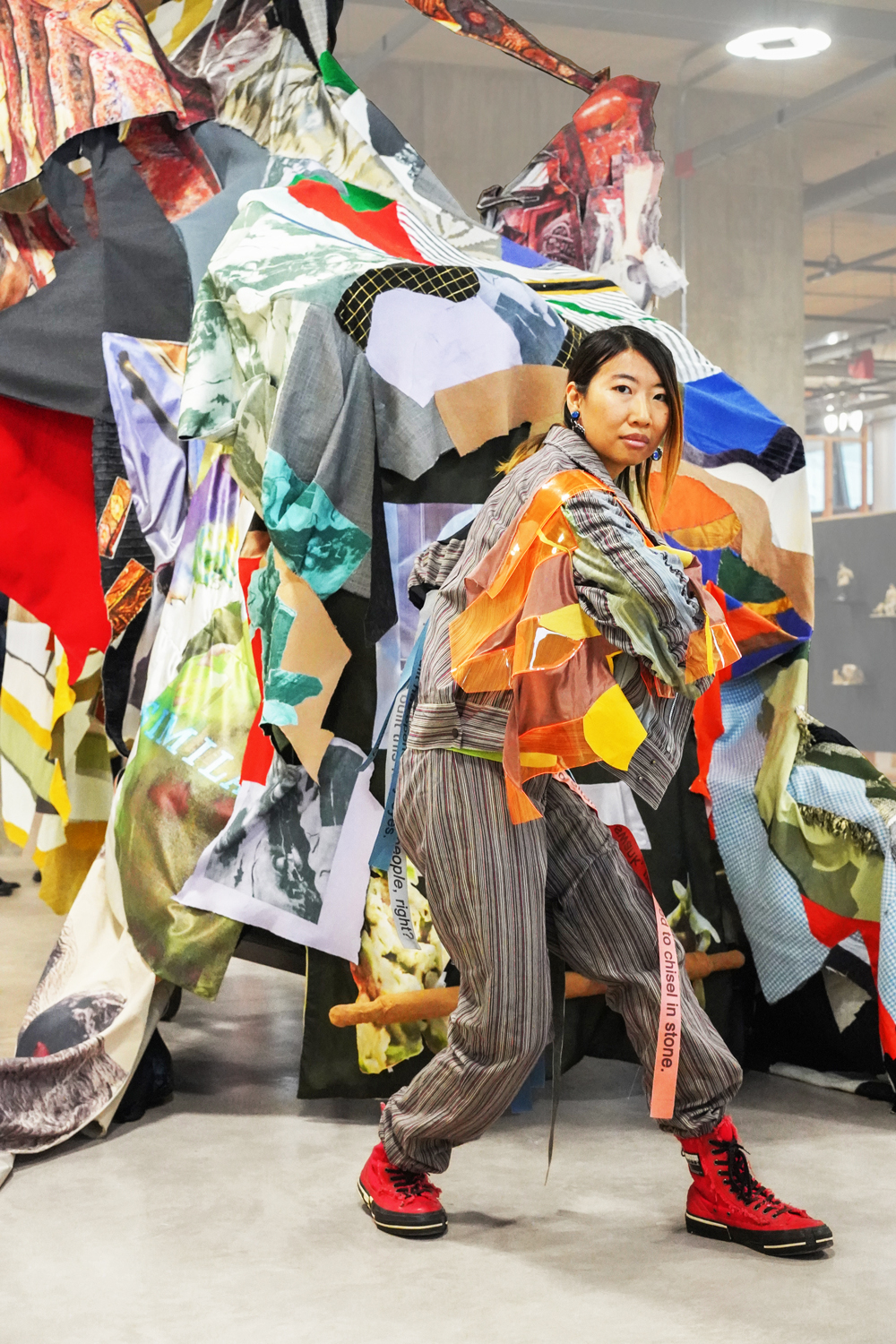
To make the cover I used a patchwork technique that revealed the act of mending and layering in relation to the immediate environment. Among the materials I chose for this piece, there were printed images, letters, portable sculptures and assembled textile volumes. “For Monument’s Sake!” thus proclaimed the value of “monumental patchwork” as an unheroic, resourceful and joyful artistic process. During the opening of the graduation show, my fellow artists and I also performed as “Walking Monuments”, engaging in dialogue with visitors.
Of the almost 1,500 monuments in London, more than a fifth (20.5%) are dedicated to named men, and only 4% to named women. The number of sculptures featuring animals (nearly 100) is actually double that of named women*. This disparity inspired me to create a counter-monument that celebrates female, marginal, and collective experiences, in an attempt to “patch the distance” between my textile work and the institution of history.
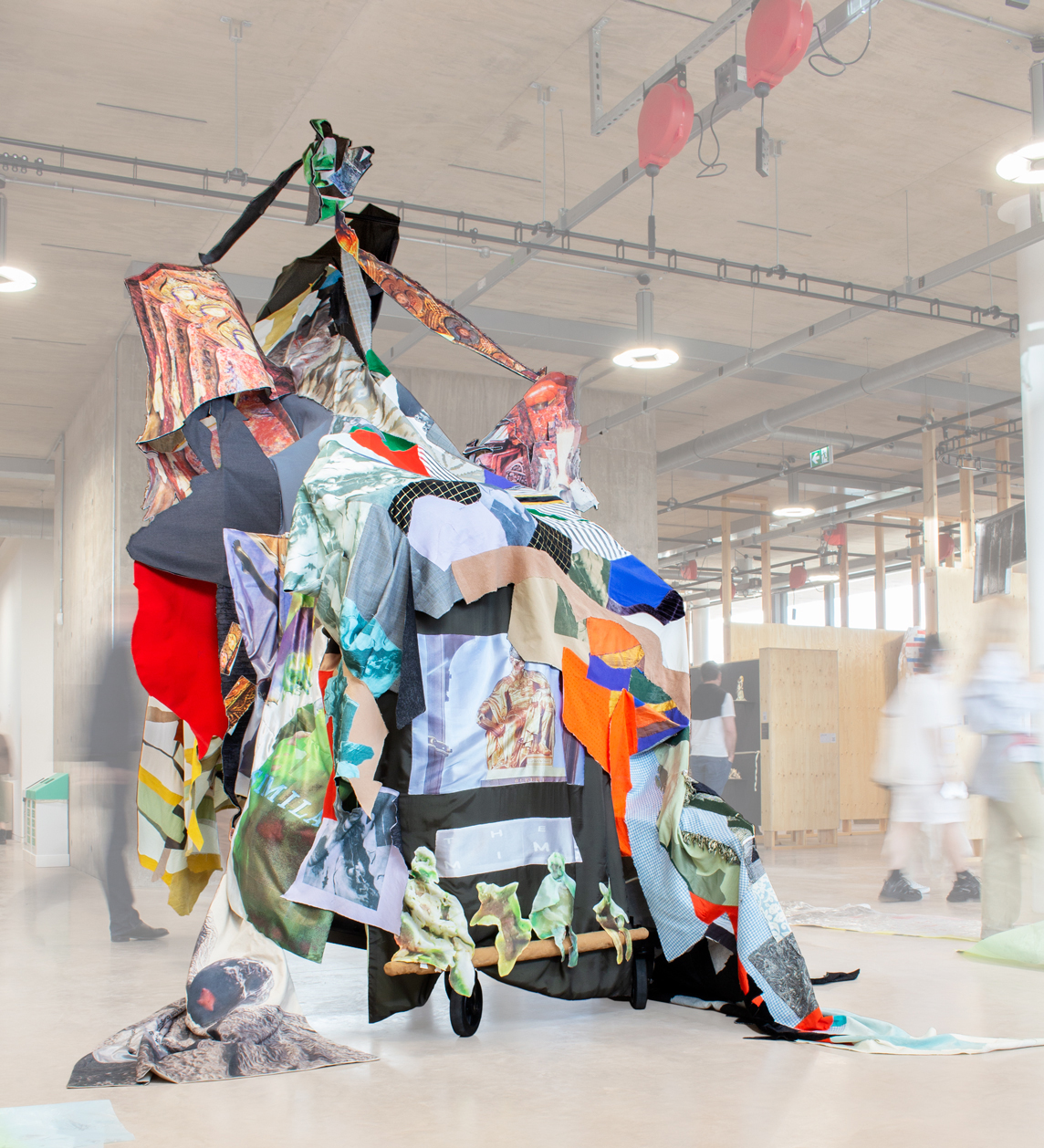
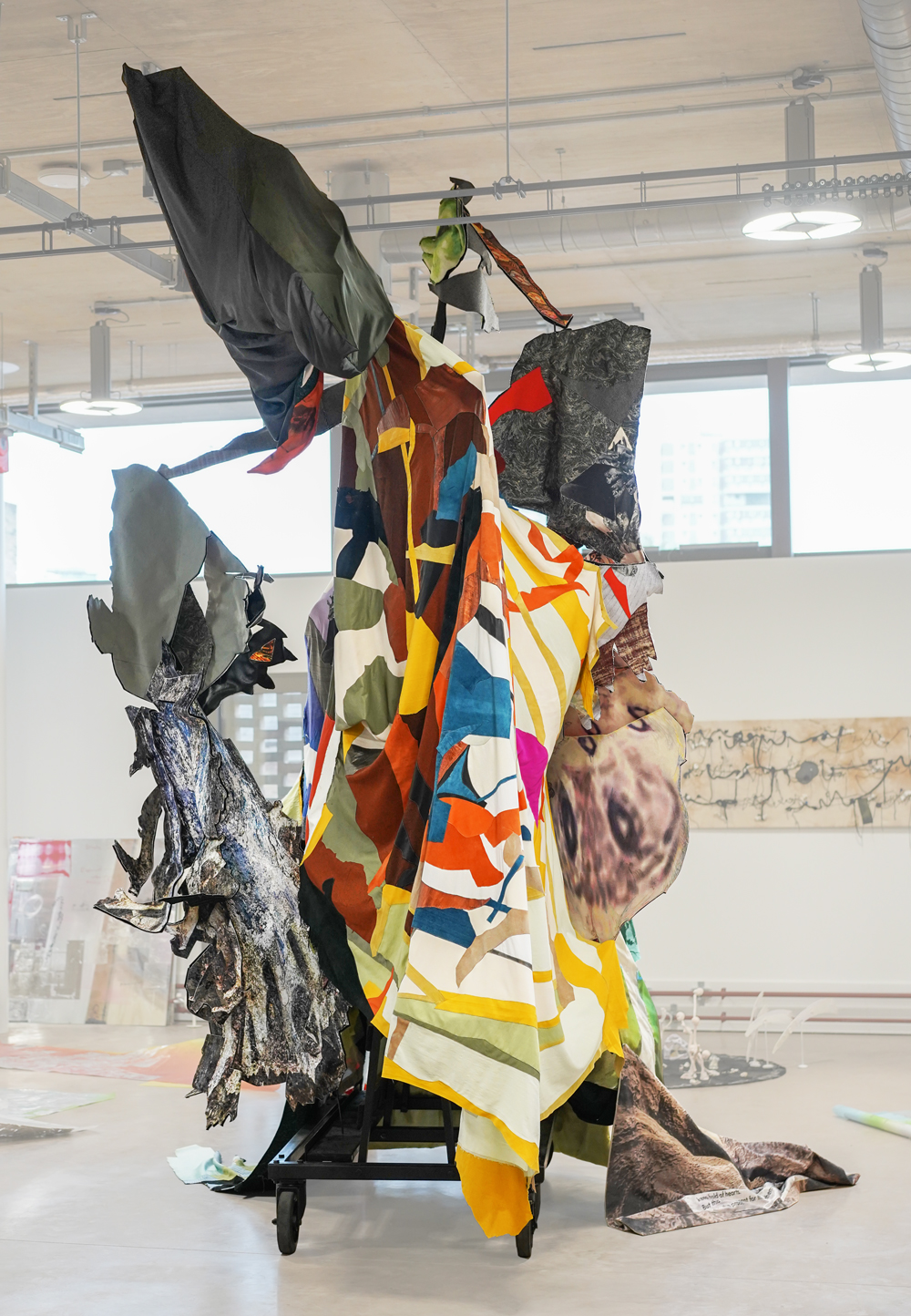
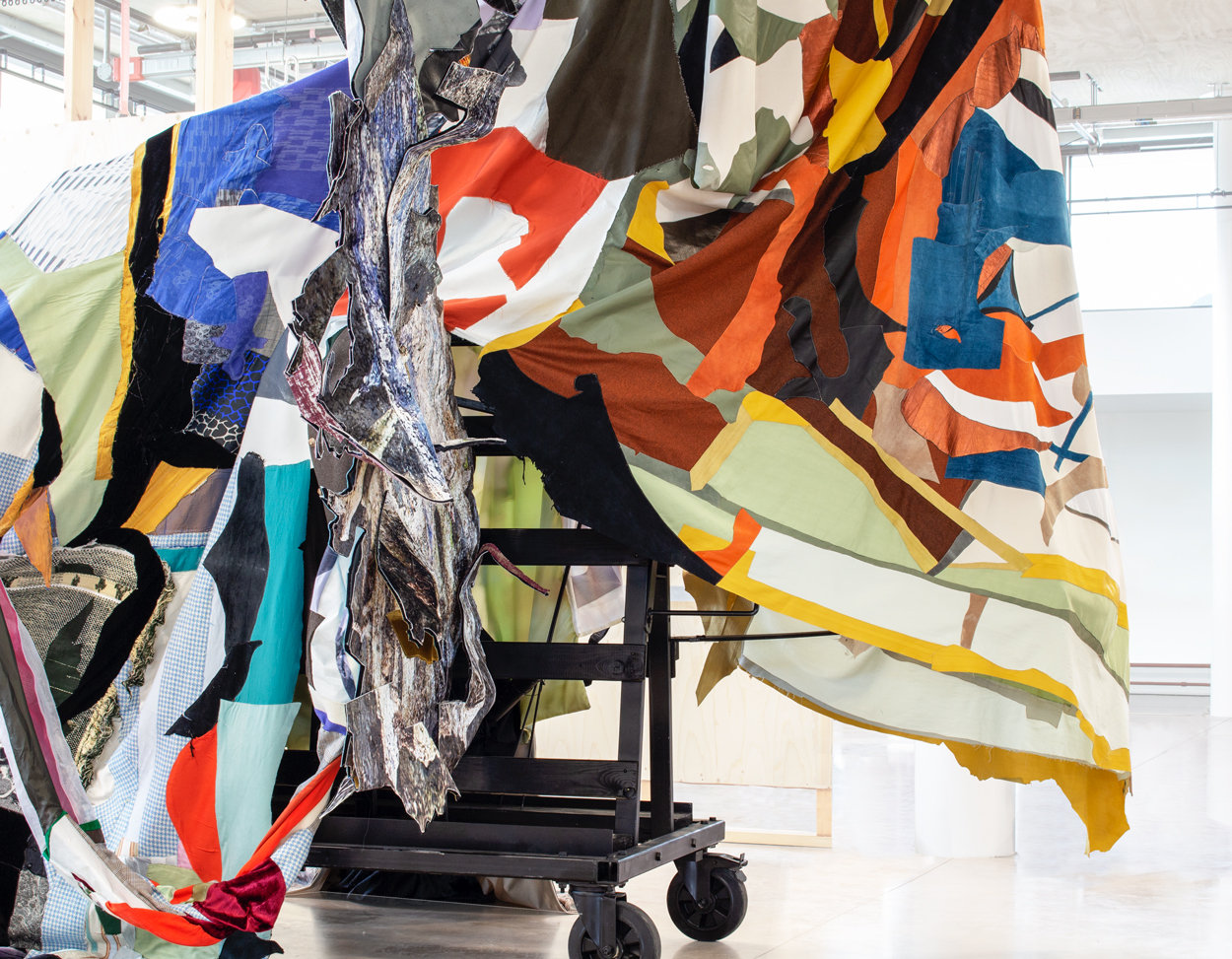
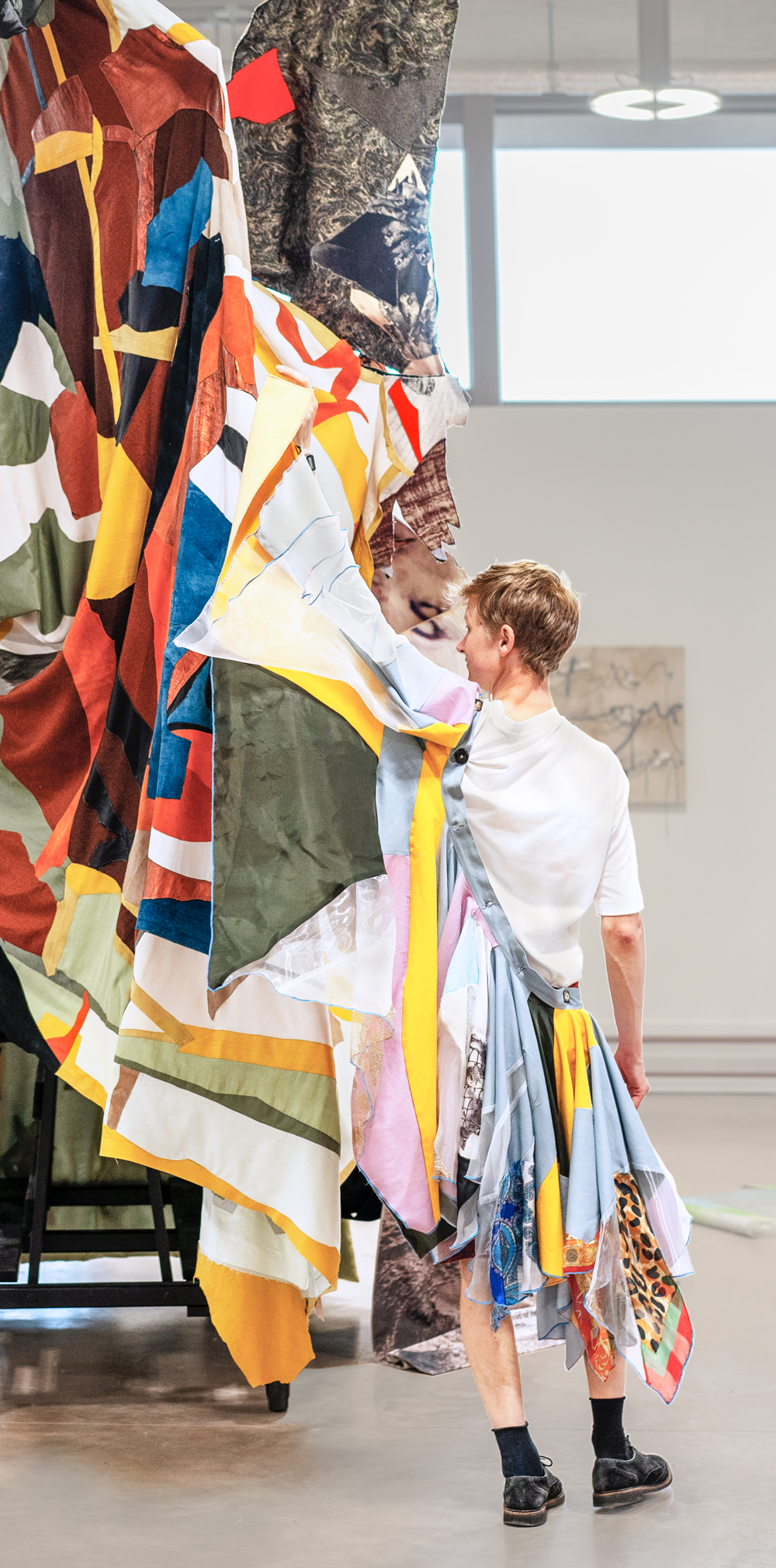
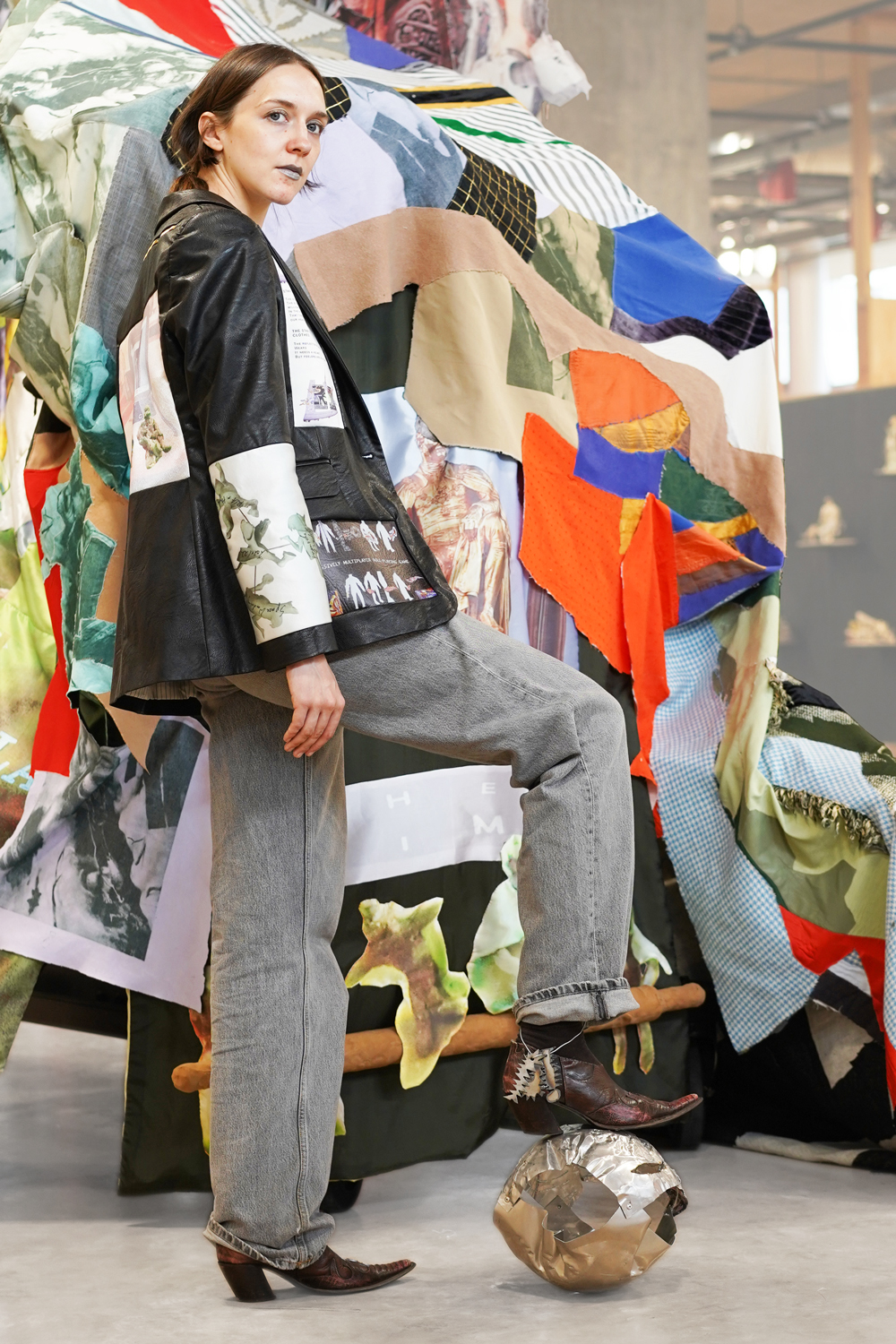
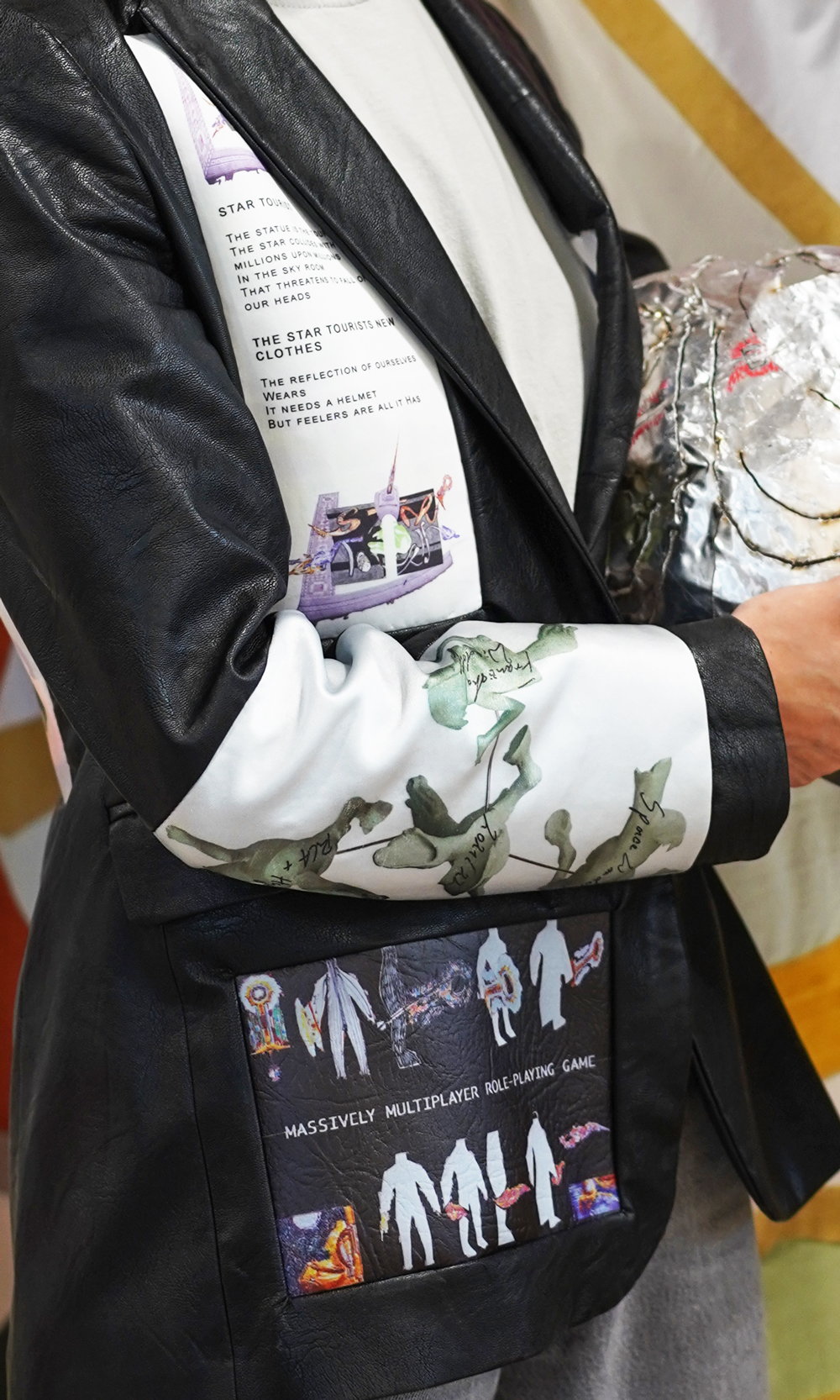
“For Monument’s Sake!” installation elements and extensions:
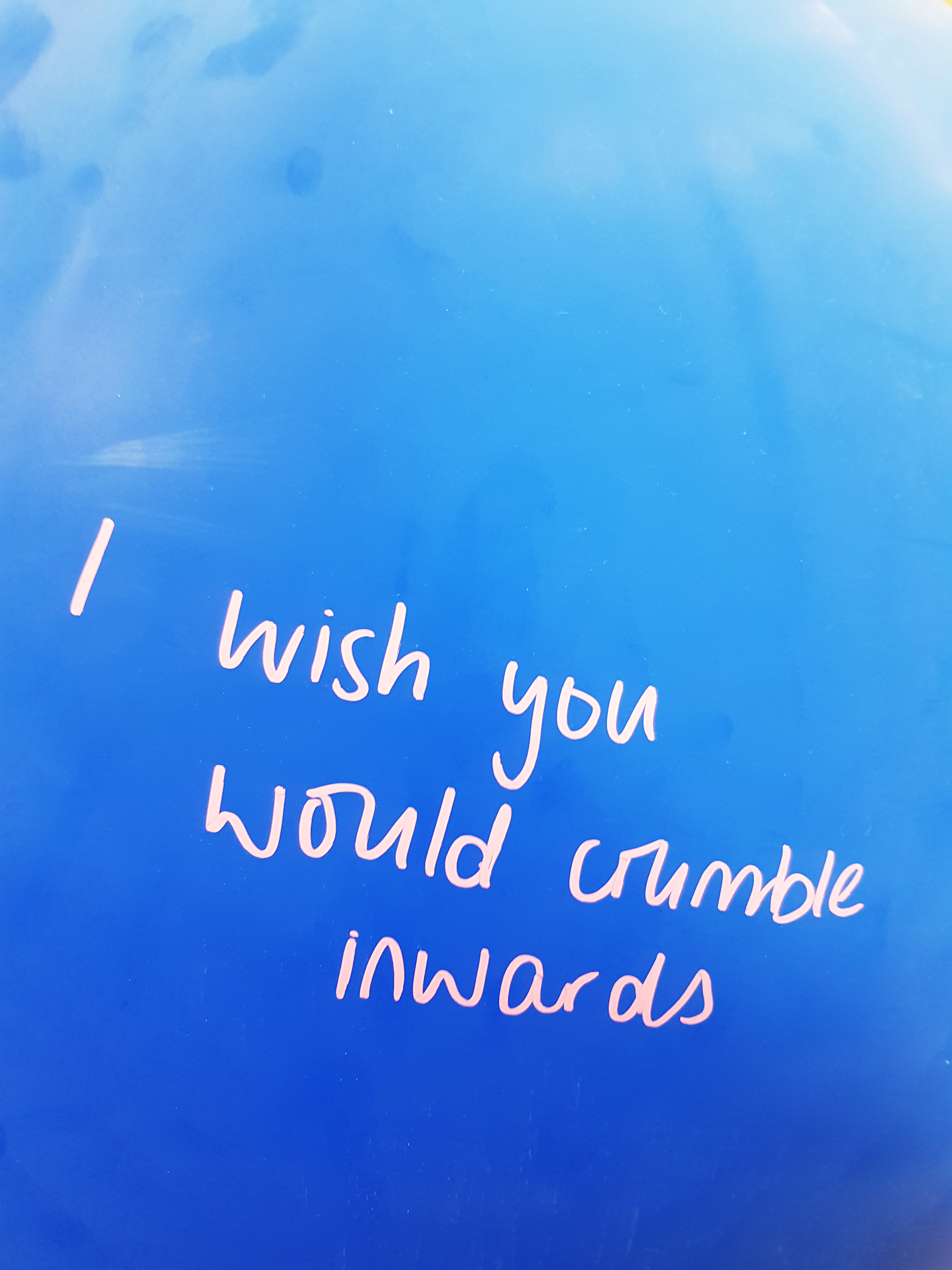
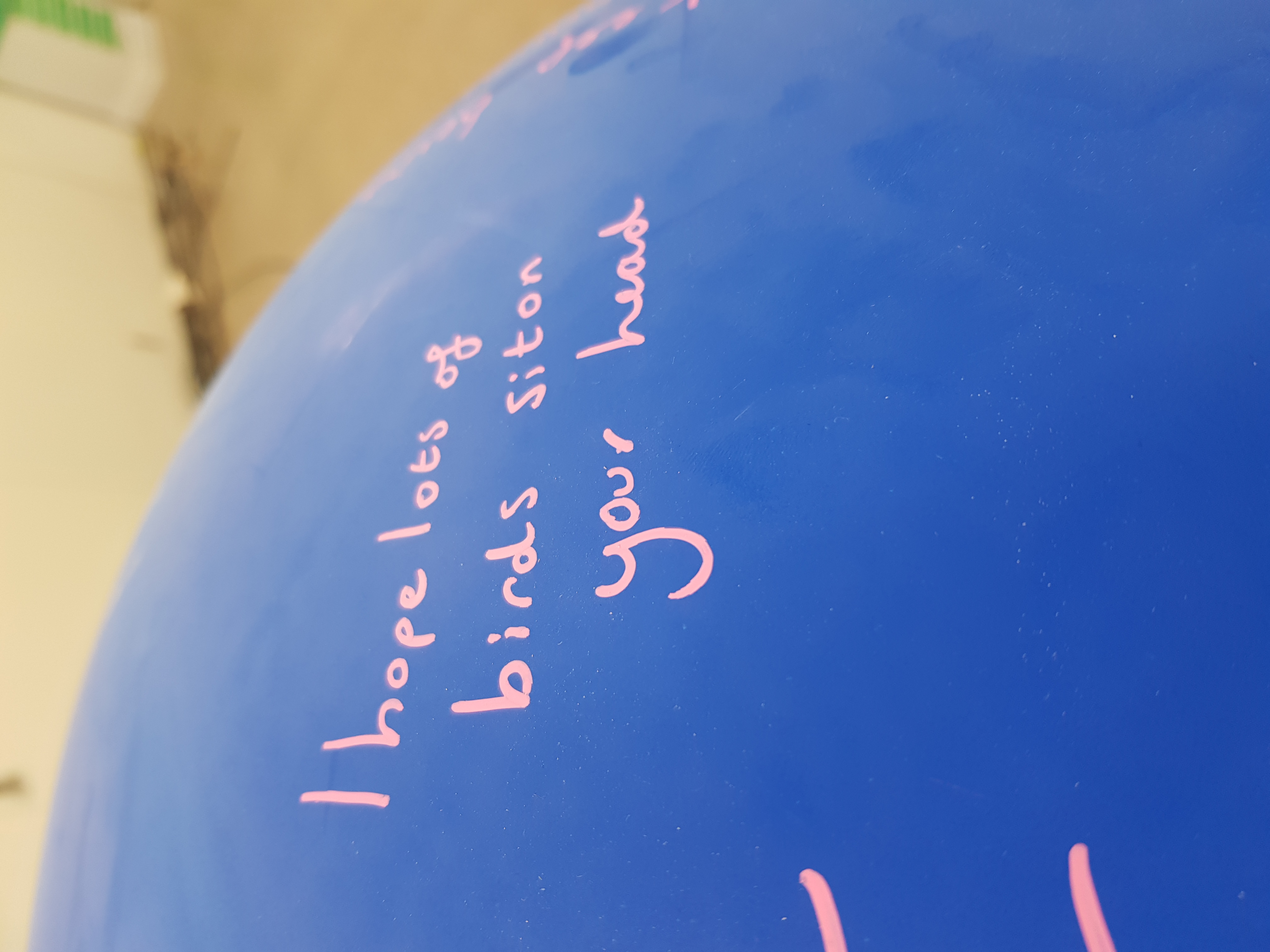
The Leonoracle sculpture refers to G.F. Watts’s Physical Energy in Kensington Gardens - a dramatic representation of a rider on a rearing horse, which I patched this with the depictions of horses by the British and Mexican Surrealist painter and novelist Leonora Carrington (1917–2011). As a tactile “oracle,” the sculpture was designed to act as interactive: during the opening, my fellow artists and I encouraged visitors to examine the piece and turn it around in their hands. They were also invited to write their ideas for the future of the park statues on a balloon.




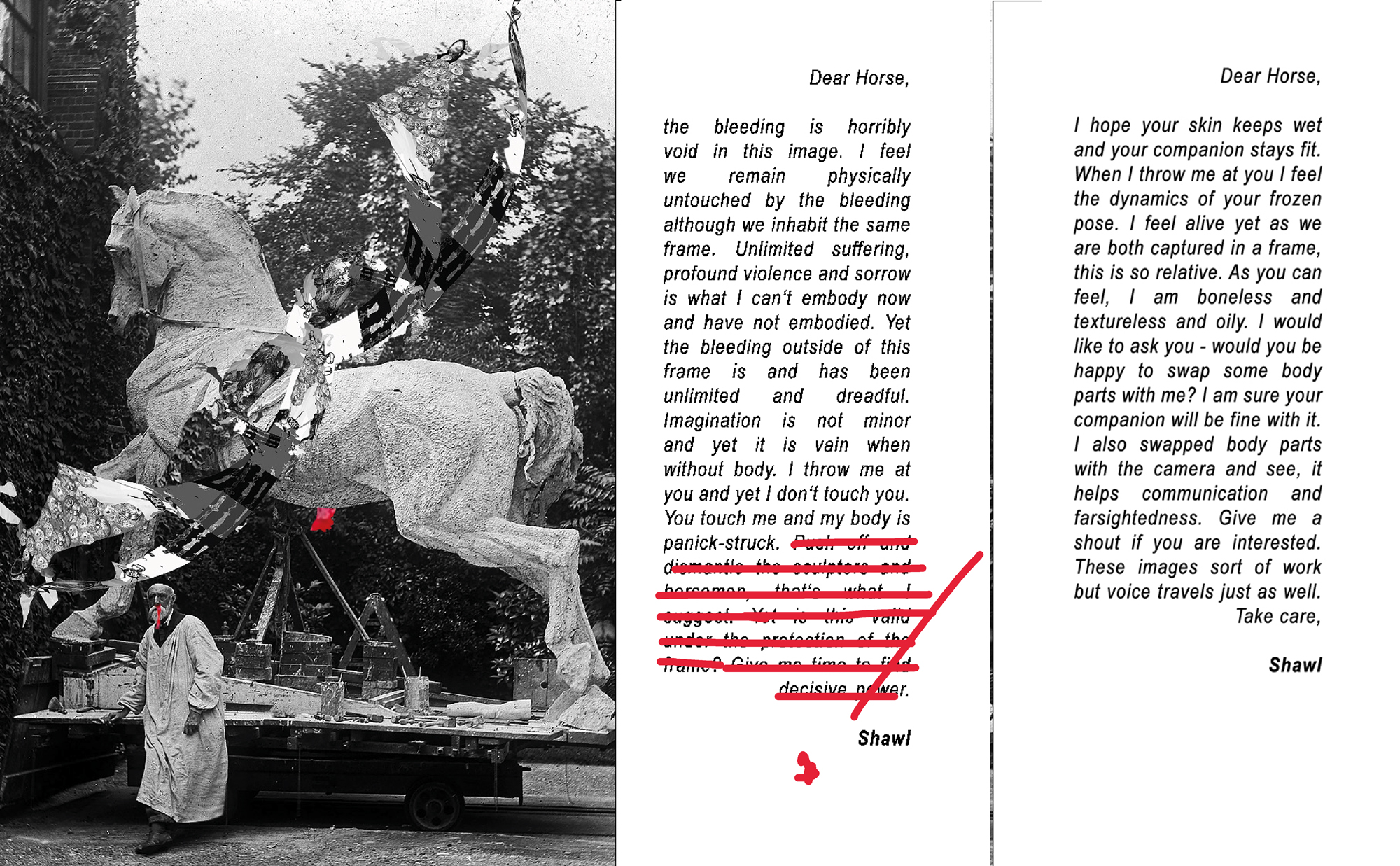
Shawl 1 & 2 digital patchwork is based on an archival image of G.F. Watts with the first cast of Physical Energy, which I manipulated by replacing the rider with a fictitious textile character of the shawl. Next to the photograph, there is a letter the shawl wrote to the Horse, containing the criticism of imperialism and its harmful consequences. The letter also addresses the statue, the photograph, as well as the nature and potentiality of other elements from the historical and media-reflective perspectives.
The piece below, titled “There Are Many Called XXX,” is a digital patchwork based on one of my photographs. It depicts a scene featuring a rolling pin, modeled wax figures, and a laptop screen displaying the image of Albert Memorial - here referred to as “Big Albert.” In the accompanying text I describe the scene components as protagonists in interaction.
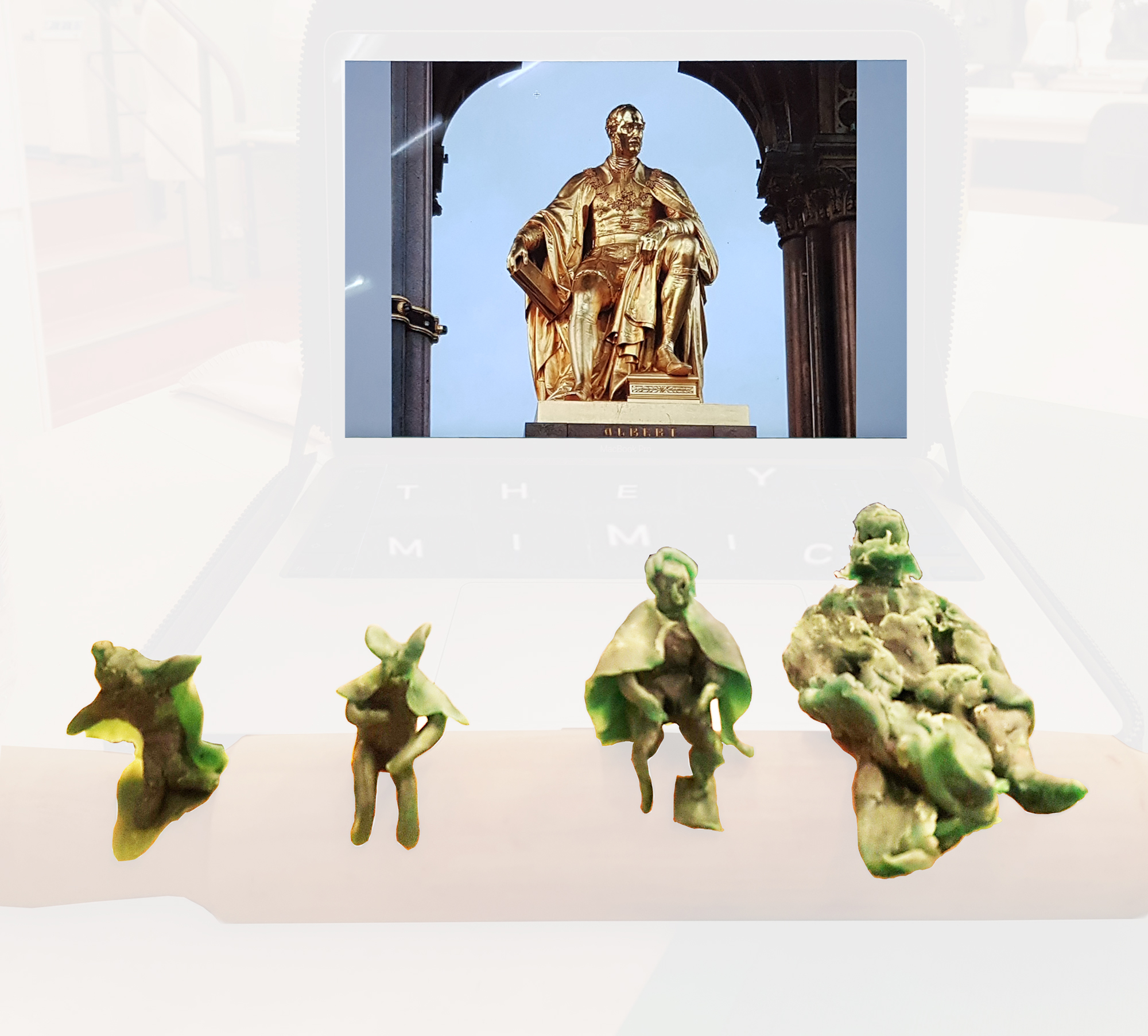
“Big Albert's golden glow made their backs supple, slowly caving in. The sound of the letters jumping on the keyboard anticipated a sudden spin of the rolling pin. Forestalling the collapse of their poses, they happily gave in to Big Albert’s siren call... .They found themselves thrown against a window directly overlooking Big Albert, but never reaching their desired fusion. Only the whopping punch of their bodies suggested Big Albert was (a) hit indeed.” (Text: Franziska Windolf, 2021)

Using portable elements from “For Monument's Sake!” installation, I go outside, moving towards the statues in Kensington Gardens.