Mapping
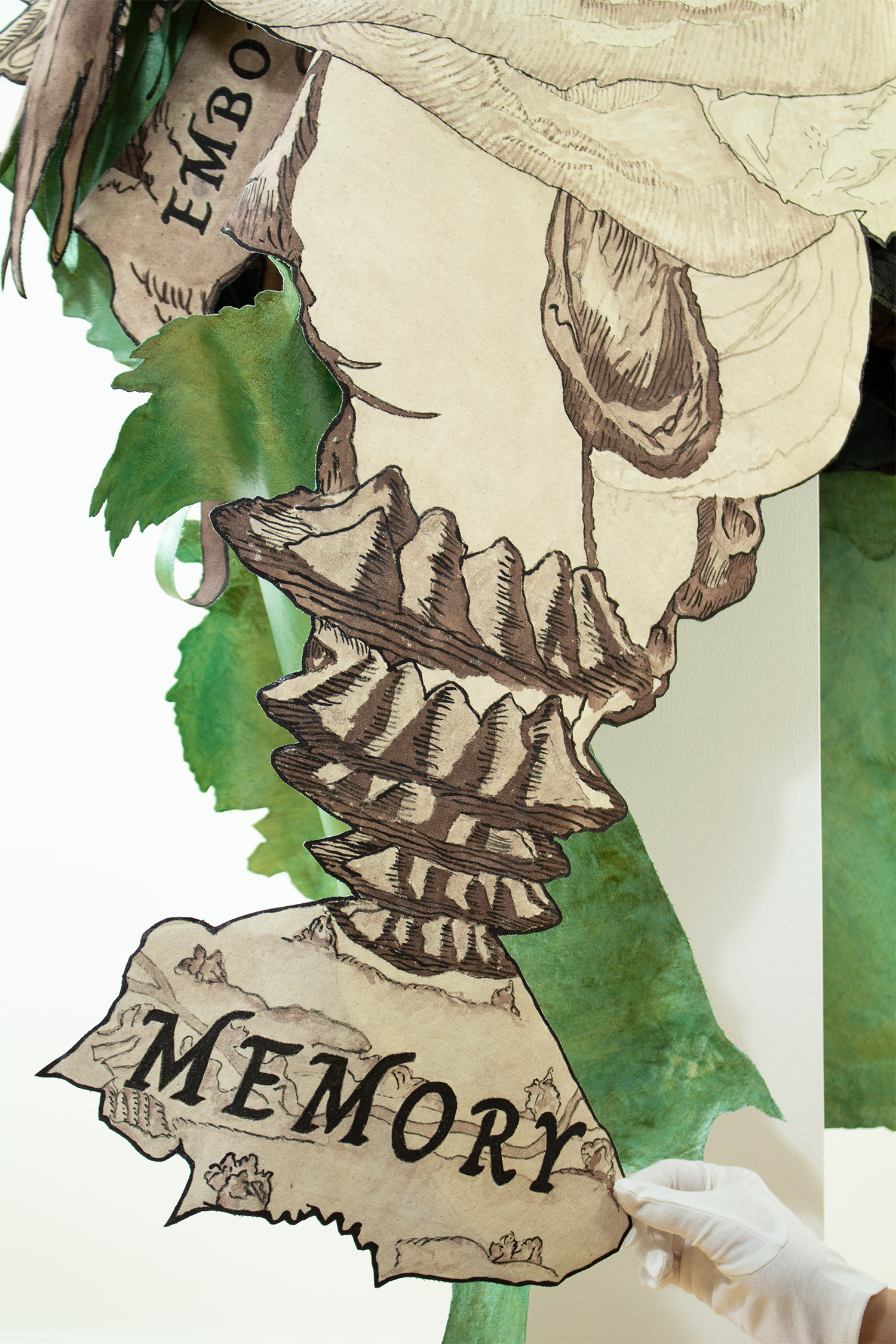
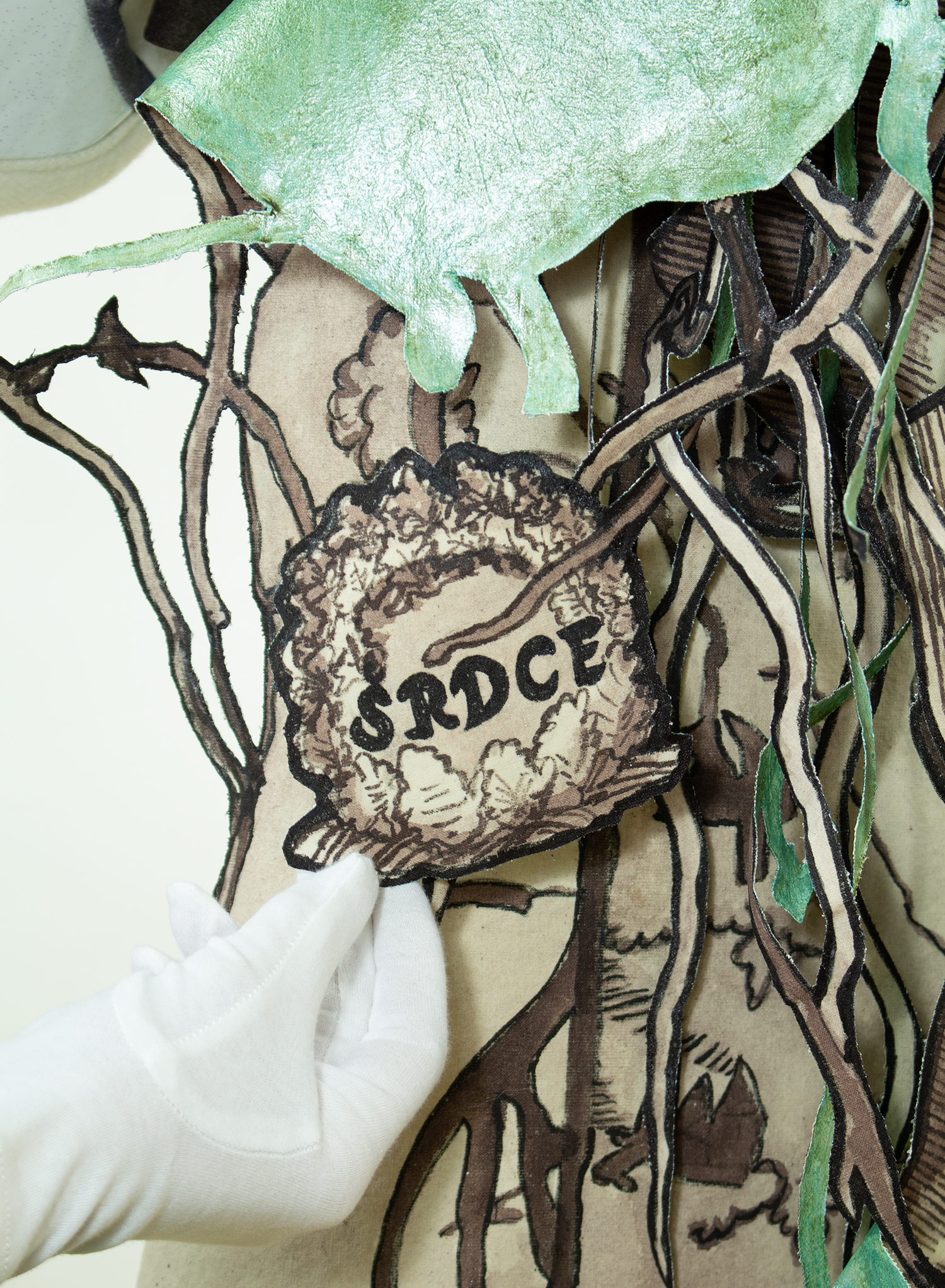
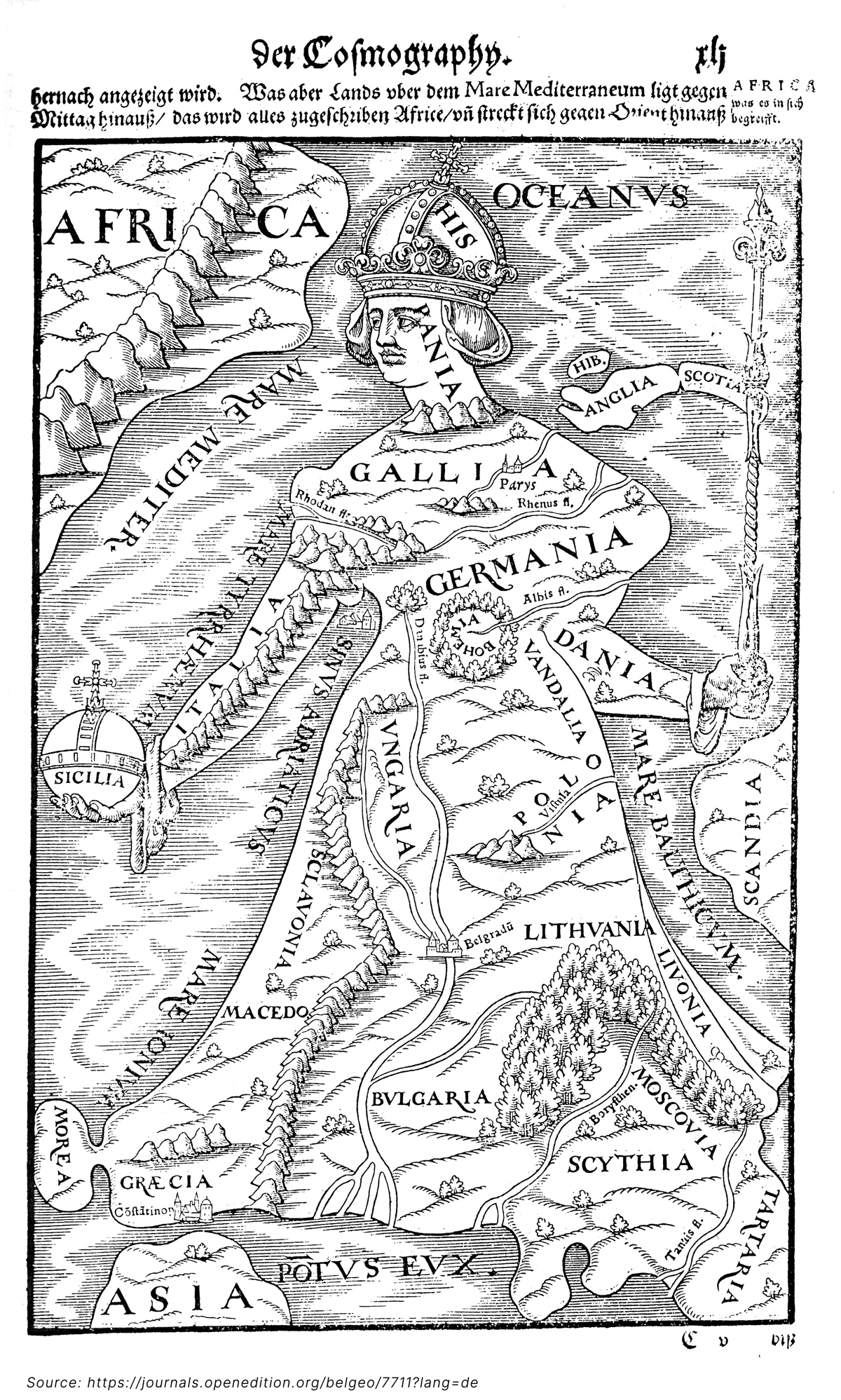
A few years ago, I started researching my grandmother’s story of fleeing from Starý Rokytník (today’s Czech Republic) to Minden (Germany) after WWII. By chance, in Sebastian Münster’s “Cosmographia” I came across an allegorical map that depicted “Europa Regina” as a female figure with different parts of her body and dress marked with geographical names. I was moved to see the Kingdom of Bohemia - the homeland of the Sudeten Germans my grandmother came from - drawn as this figure’s heart. The map became one of the sources of my inspiration for “Mapping”, a series of artistic interventions into maps and paintings by fragmenting, reassembling, and rethinking them. So far, I have been working mostly with “Europa Regina” (1628 edition) and the painting series “The Four Continents” by Jan van Kessel (1664).
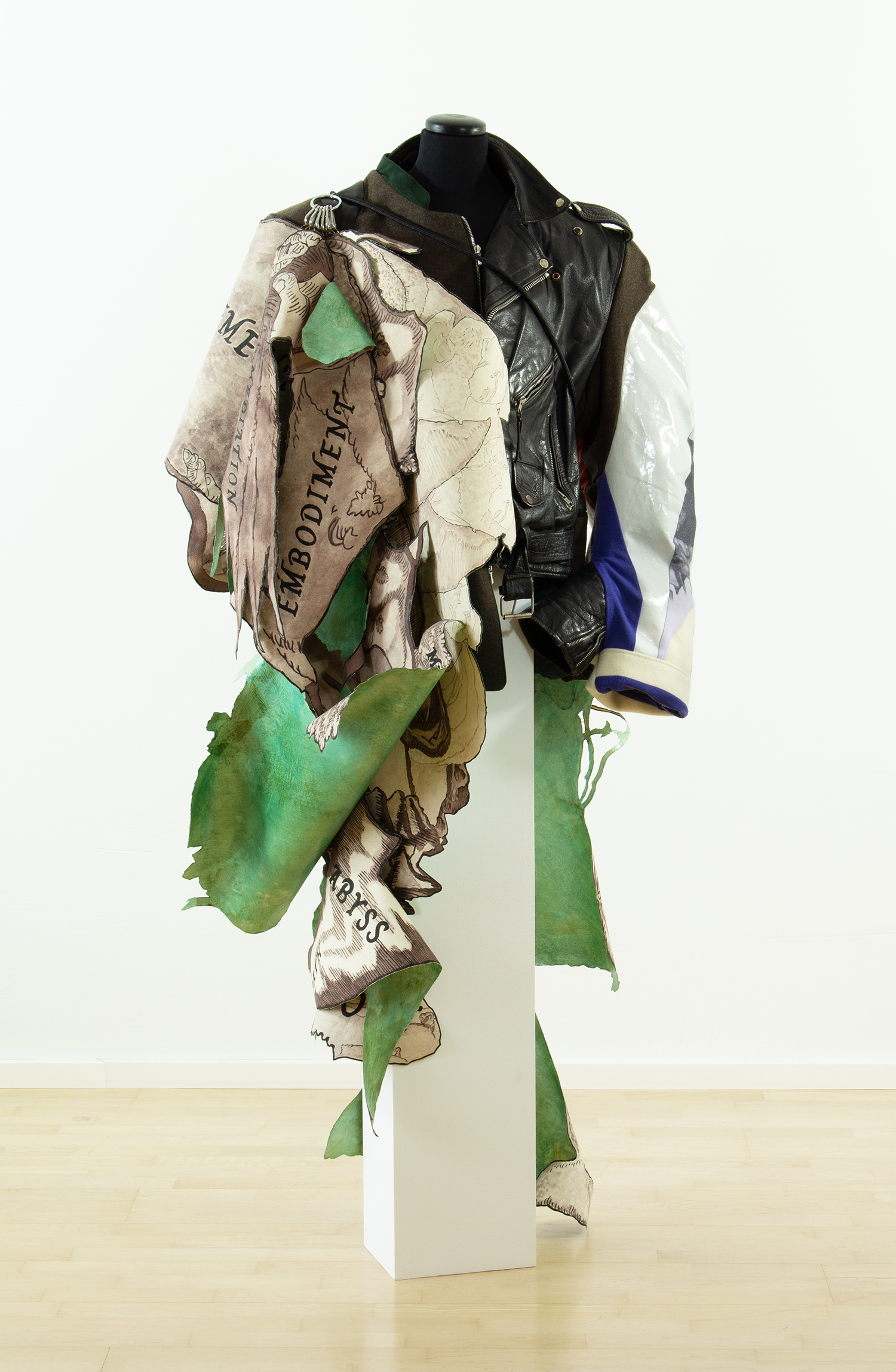
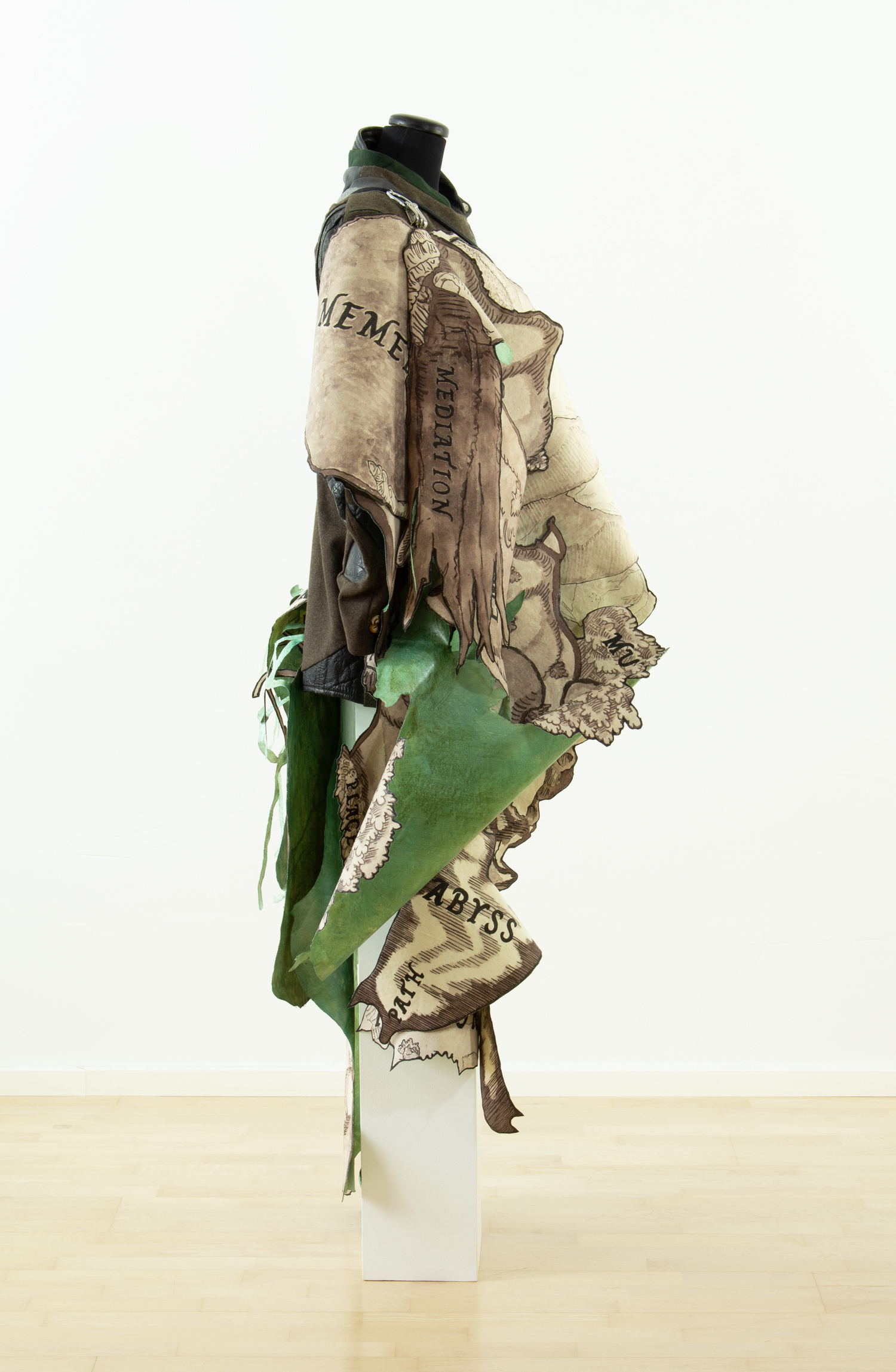
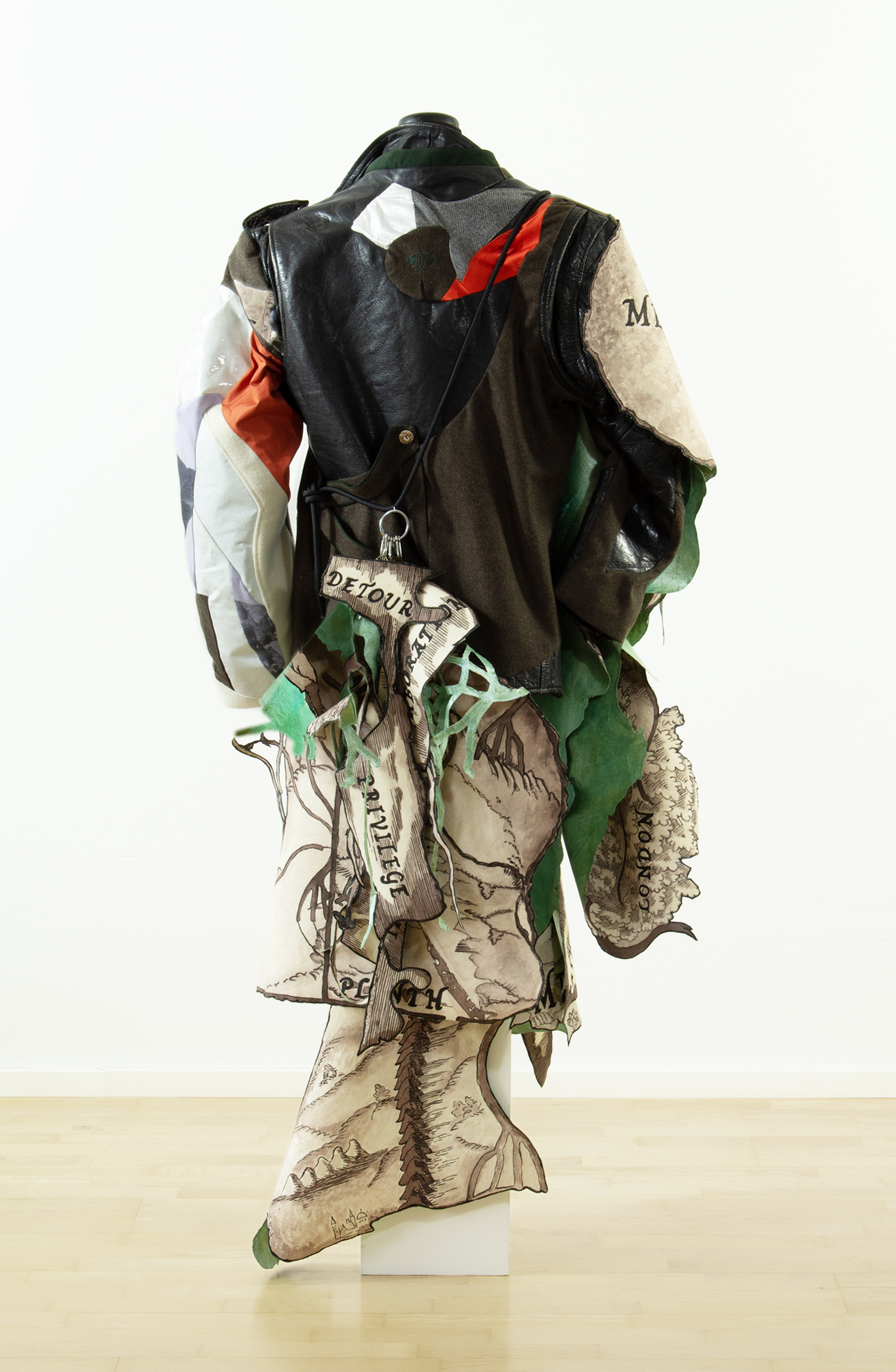
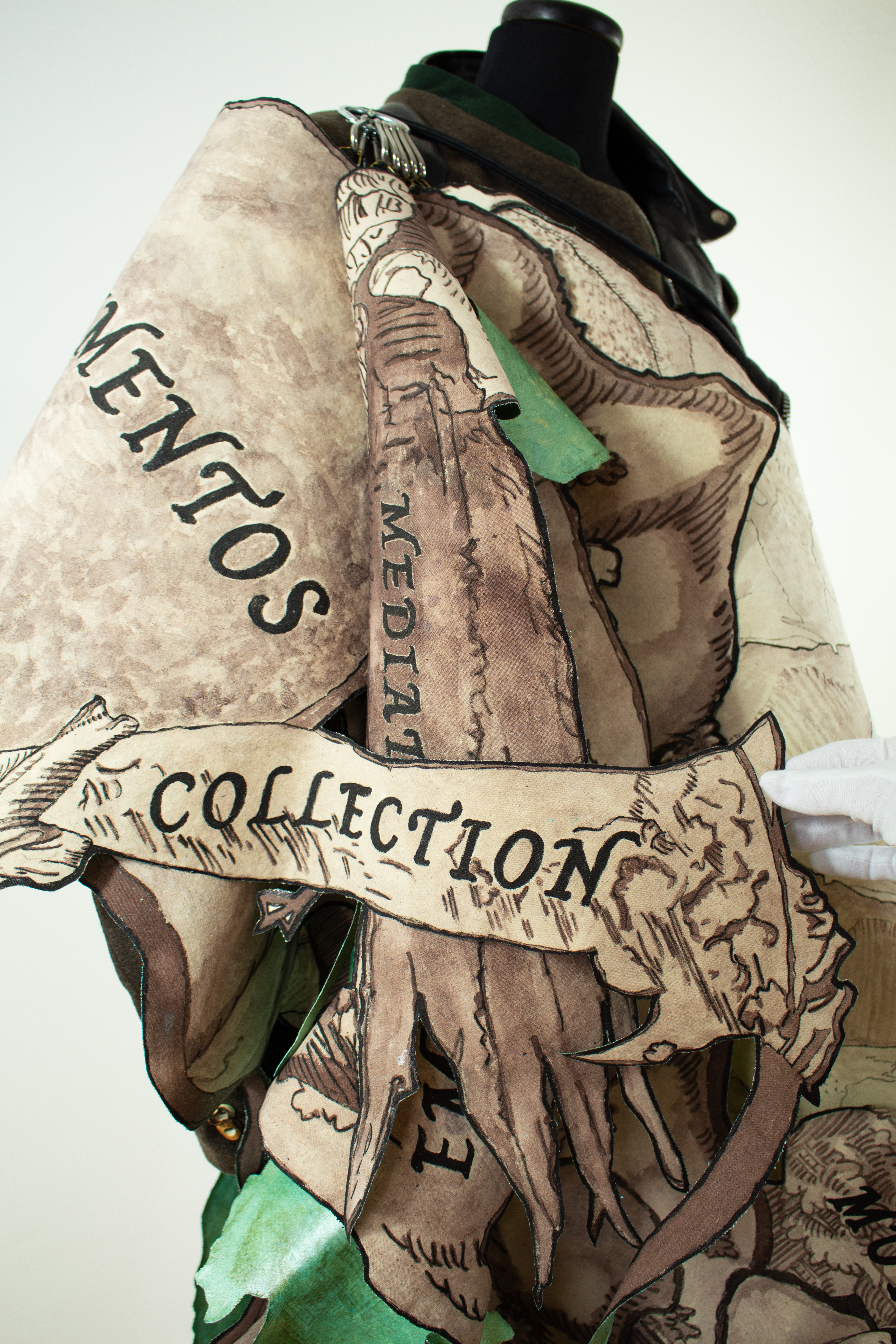
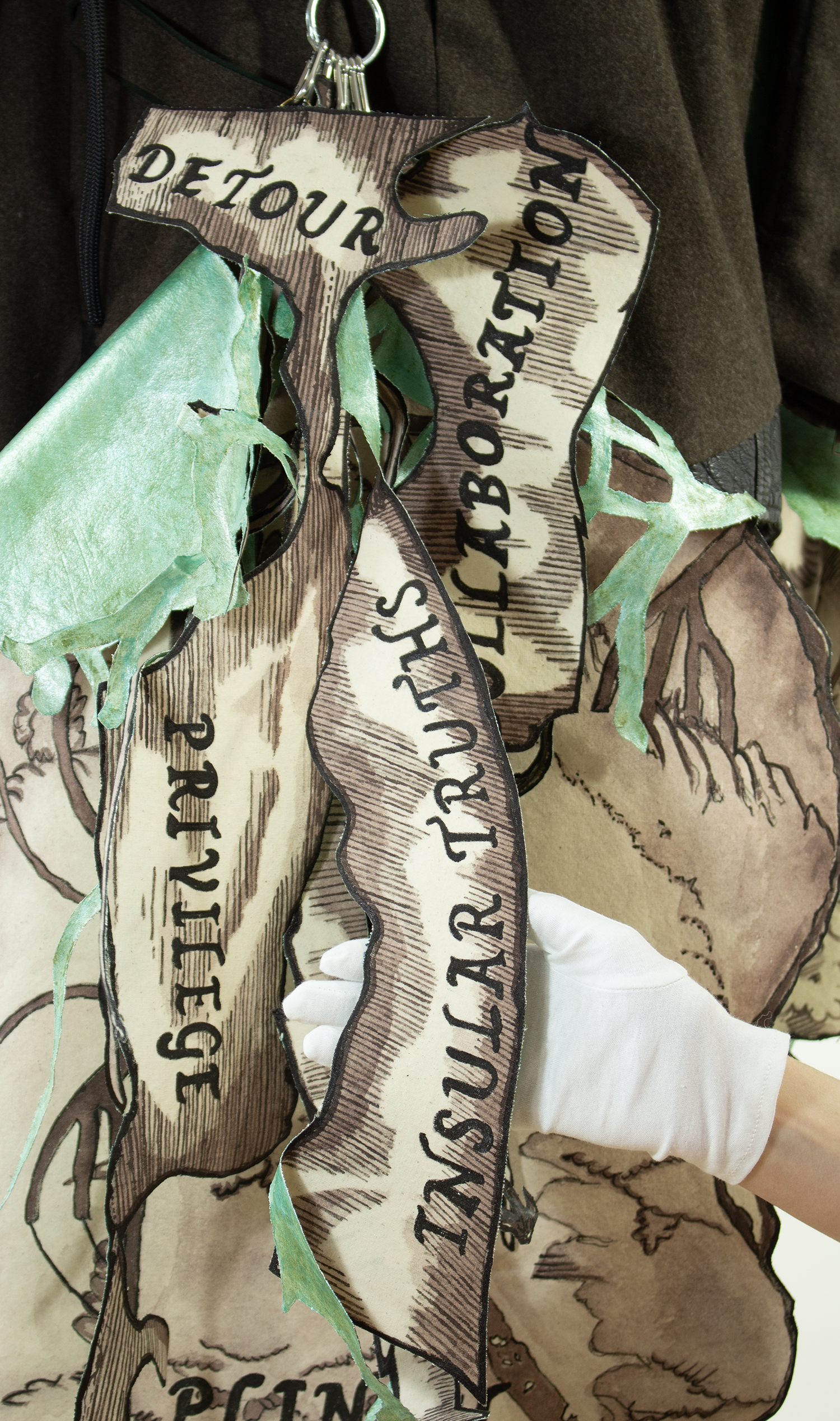
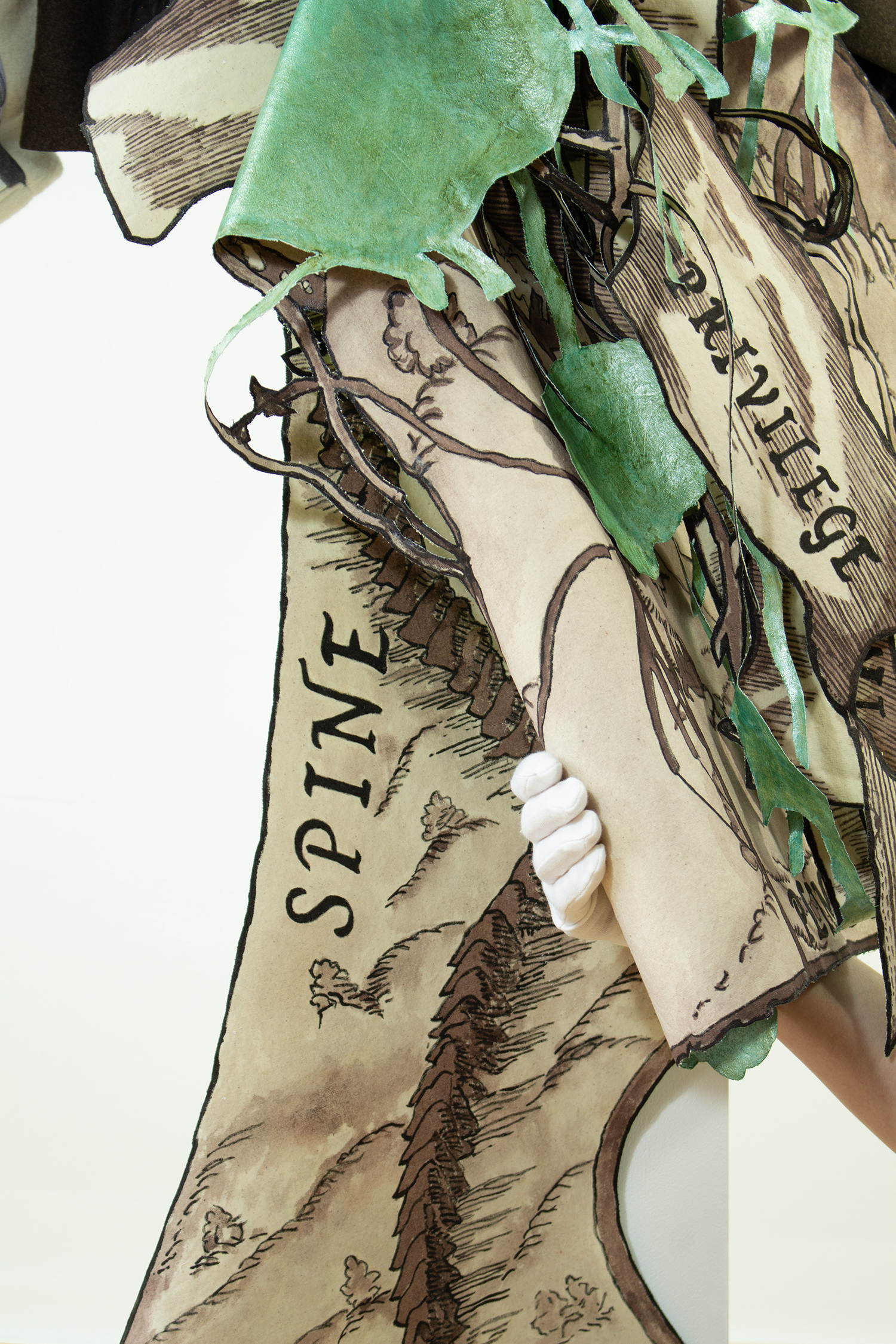
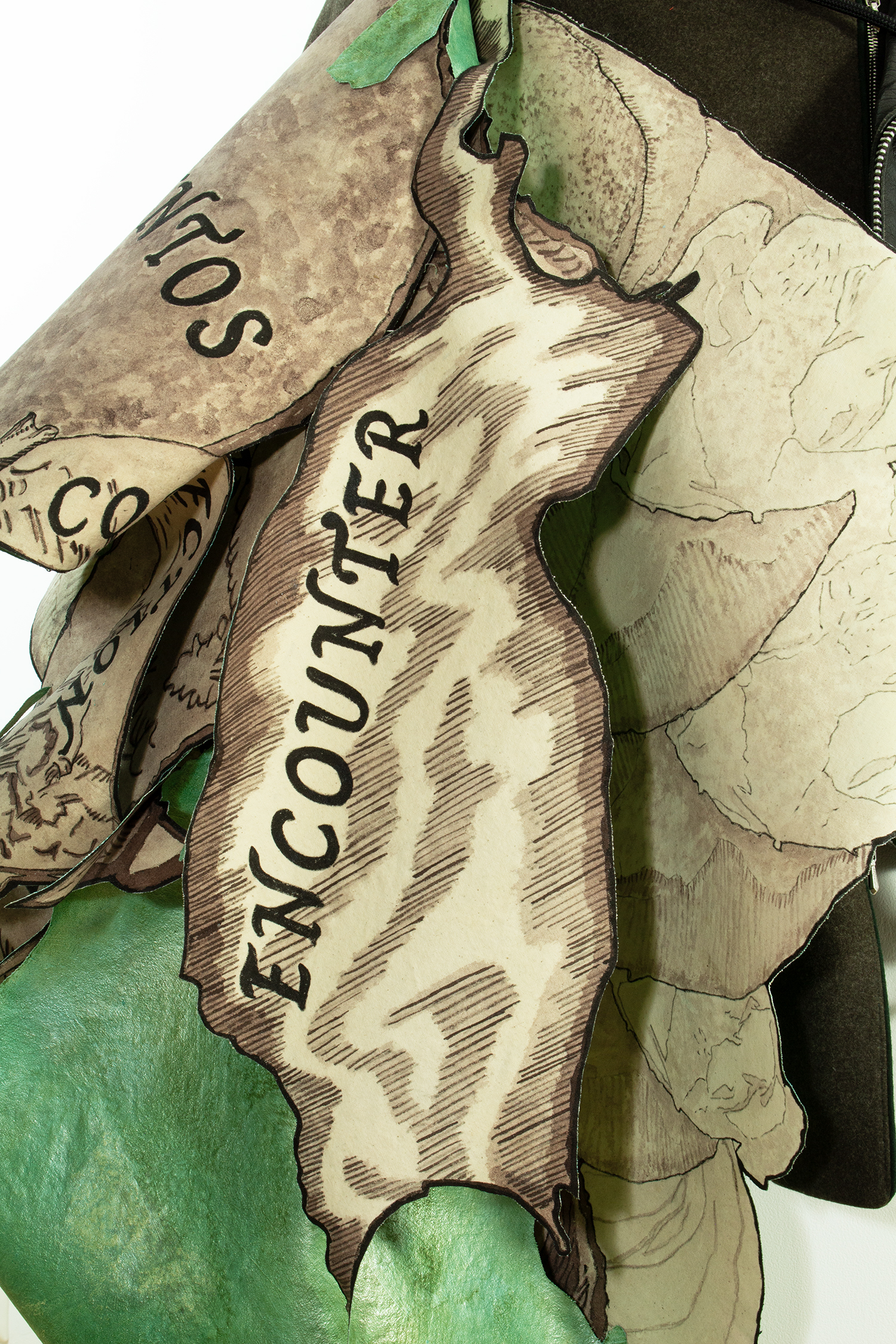
In each art work made as a part of the series, I usually apply additional practices necessary for their specific concepts. For example, in “Mapping 1” (2024), I caption various areas of my map with terms that describe my memory-focused art research. In this approach, I go beyond cartography’s original political function and focus rather on its didactic dimension. Terms like “insular truth”, “encounter”, and “spine” turn my mapping into a disassemblable landscape that becomes mobile, non-fixed, and experiential when the jacket that carries the map is put on by a person. Fragmentation and manipulation are thus used to question power dynamics inherent in this science.
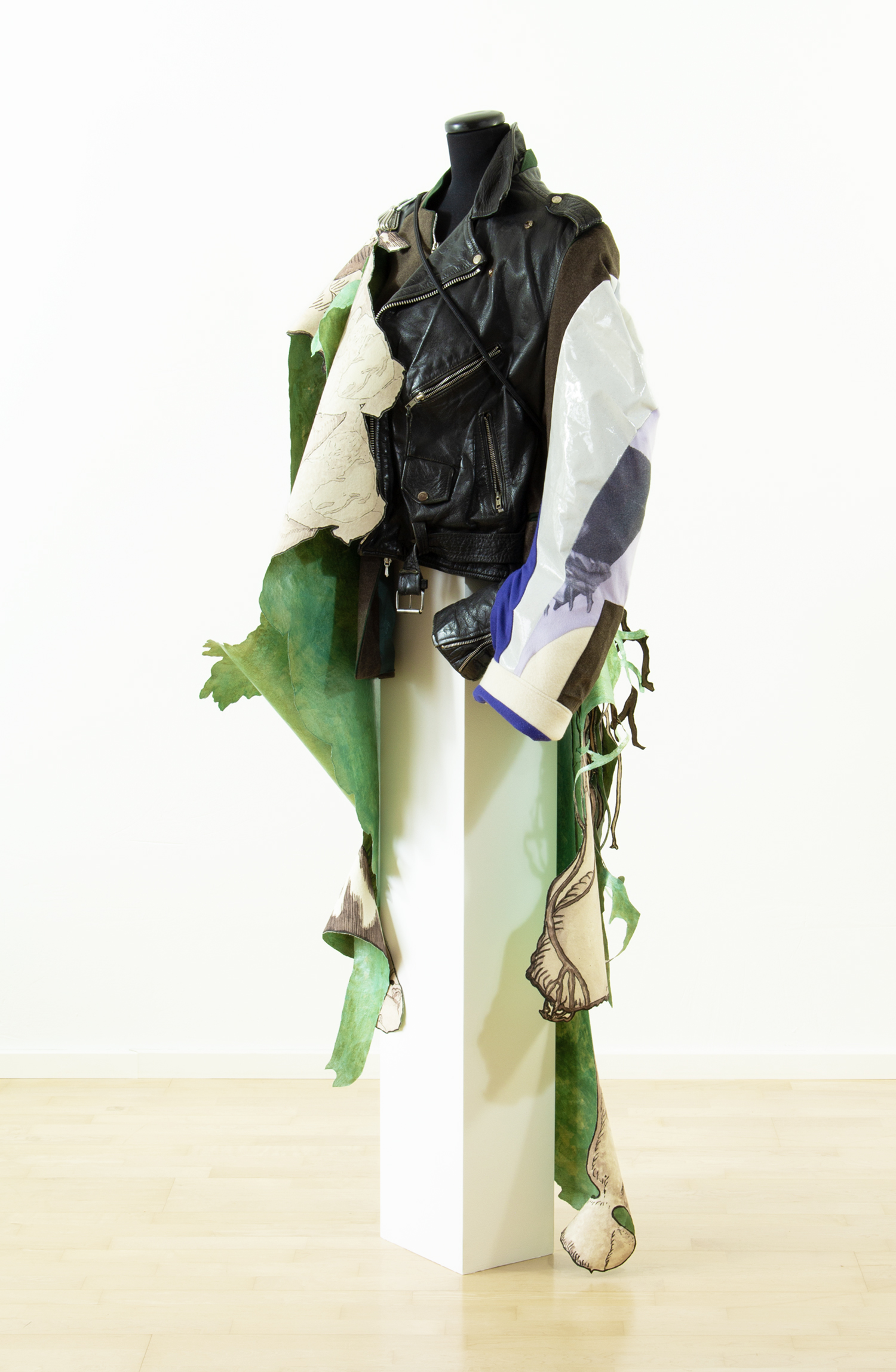
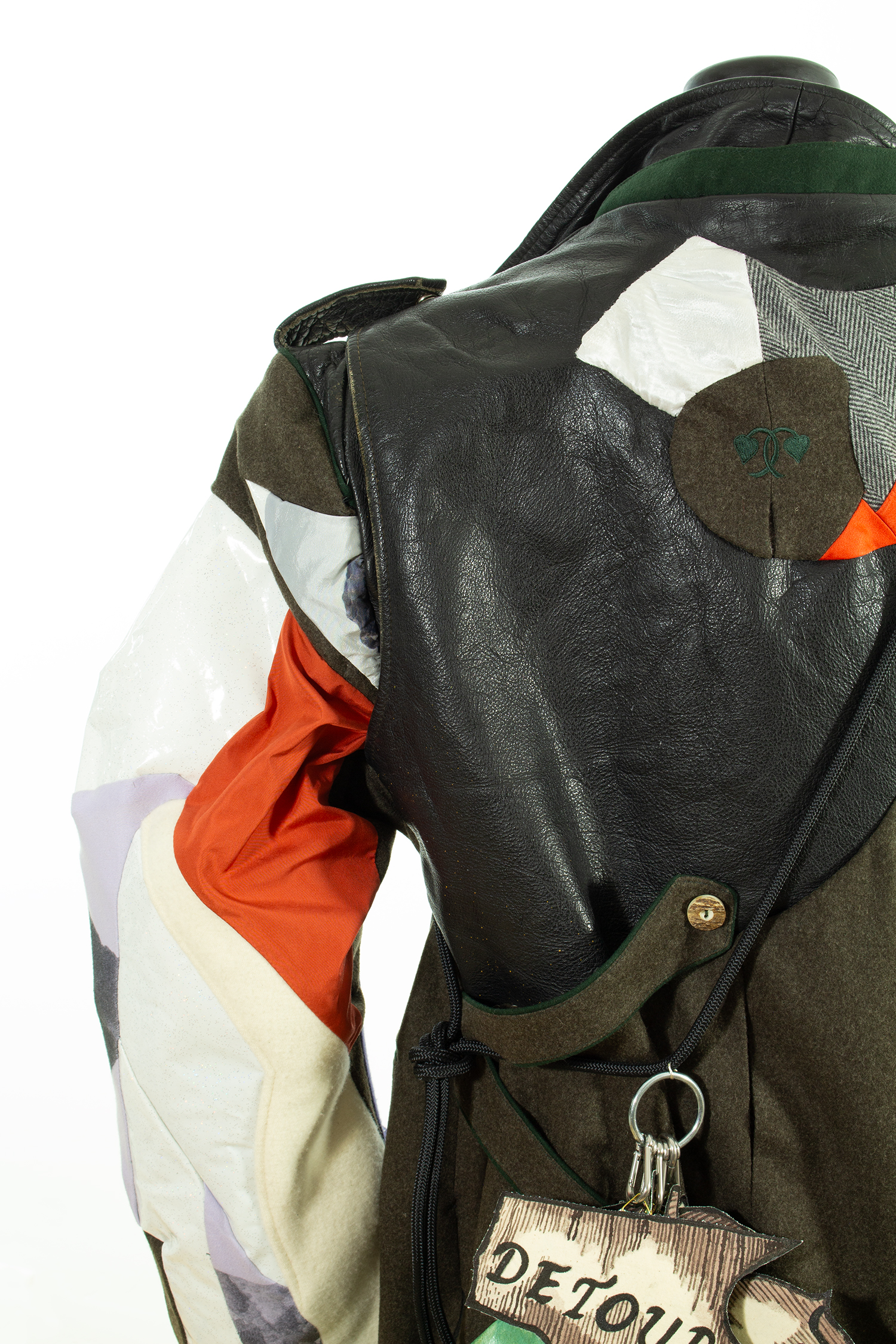
The patchwork jacket itself was chosen as an item of clothing for several reasons. First of all, it addresses maps as their main material, bringing together textiles from two geographical regions associated with certain customs and music culture: Bavaria (a federal state in the southeast of Germany) and Teplice (former Sudeten area, now Czech Republic).
In Bavaria, many people wear high-quality boiled wool “Jankers” (another term for a popular local jacket) when they attend formal gatherings or Sunday lunches, often when traditional Bavarian music is played. It is a symbol of regional pride and continuity of century-long traditions.
The other element of the garment is a battle jacket “skin” piece I was given by Petr Růžička, a Czech professional punk musician and producer, during my 2024 residency at the House of Arts in Ústí nad Labem. This leather item is a powerful testament to the man’s resilience connected with the late 1980s and the Velvet Revolution in 1989 - a peaceful uprising that led to the fall of communism and the restoration of democracy. In those years, Růžička was persecuted by the state because of his music engagement and arrested in Teplice.
These counterpoints add another conceptual dimension to “Mapping 1” declaring that any mapped and labelled territory should specifically be made for people who feel conflicting emotions about their personal sense of belonging. The jacket is also exhibited as a single work, not strictly tied to “Mapping 1”.